A Homecoming in Budapest: Classical Christian Education Returns to Europe
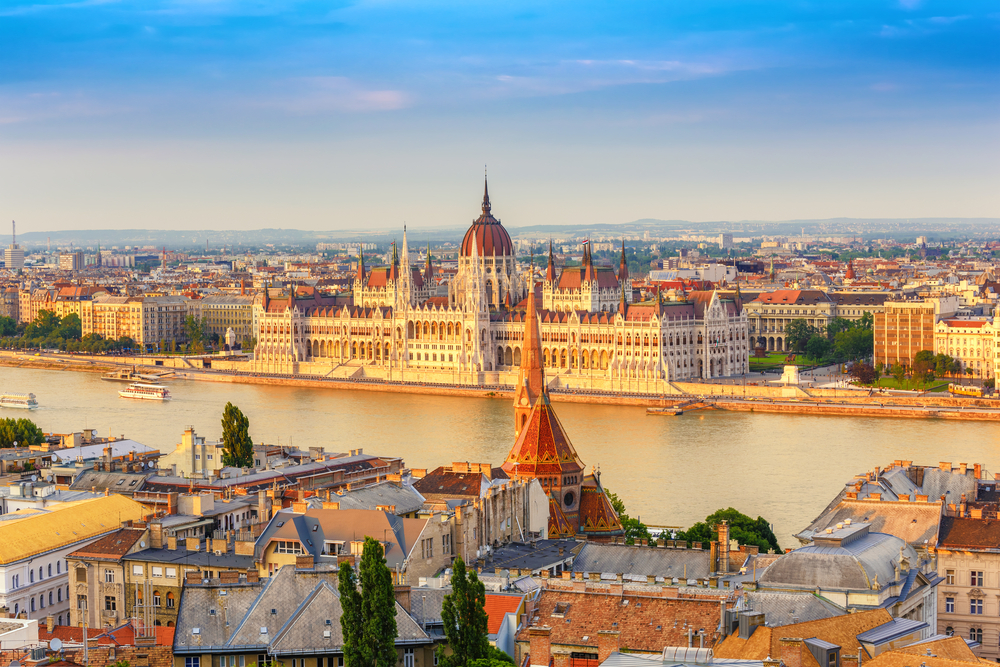
There is something almost providential about gathering in Budapest to talk about the renewal of Christian civilization. The city's spires cut into a crisp Central European sky. The Danube moves beneath centuries-old bridges. The architecture of the old quarters speaks of a world ordered around beauty, permanence, and faith, not the frantic utility of the modern age. For the educators, pastors, missionaries, and school leaders who traveled from across Europe and the United States for this historic gathering, the setting was not incidental. It was the point.
The two-day summit, hosted at Veritas Collegiate Academy in Budapest, the first classical Christian school in modern Hungary, brought together a remarkable coalition united by a shared conviction: the recovery of classical Christian education is not merely an academic project. It is the work of civilizational renewal. The Veritas Collegiate Academy is the First Internationally Accredited School by The Association of Classical Christian Schools, and they will be in Atlanta this summer to receive recognition of this important accomplishment, not just for themselves but as an inspiration to all the Schools in the International Classical Christian Alliance.
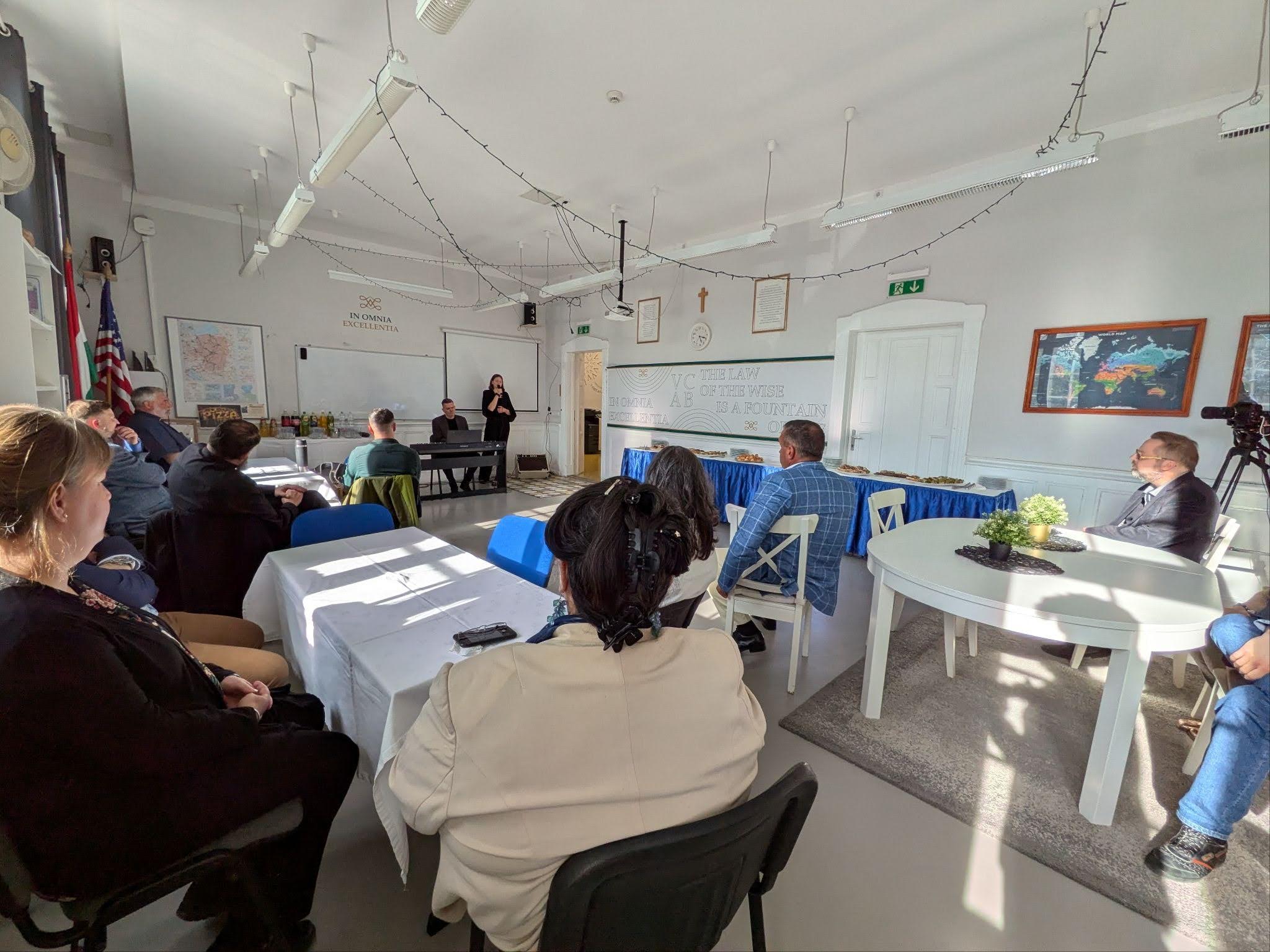
Dr. Béla Szilágyi, who leads Hungarian Baptist Aid, the thirty-year-old humanitarian and educational organization that now finds itself at the unlikely forefront of a global classical education movement, opened the gathering with both warmth and historical weight. "Classical education is a homecoming," he told the room. While the classical tradition is experiencing its greatest modern revival in the United States, its roots run deepest in the cultures of Central and Eastern Europe. The trivium and quadrivium were not American inventions; they were born here, in the grammar schools and cathedral chapters of medieval Europe, refined in the great Protestant academies of the Reformation. That they are returning to the continent of their origin is, Dr. Béla suggested, precisely the kind of thing God does.
Dr. Béla expressed unmistakable pride that Veritas stands as the first officially recognized classical Christian school in Hungary, and he looked forward with barely contained anticipation to deeper cooperation with the ACCS. "Educators are called to forge new paths where none exist," he said, "rather than simply choosing between established ones."
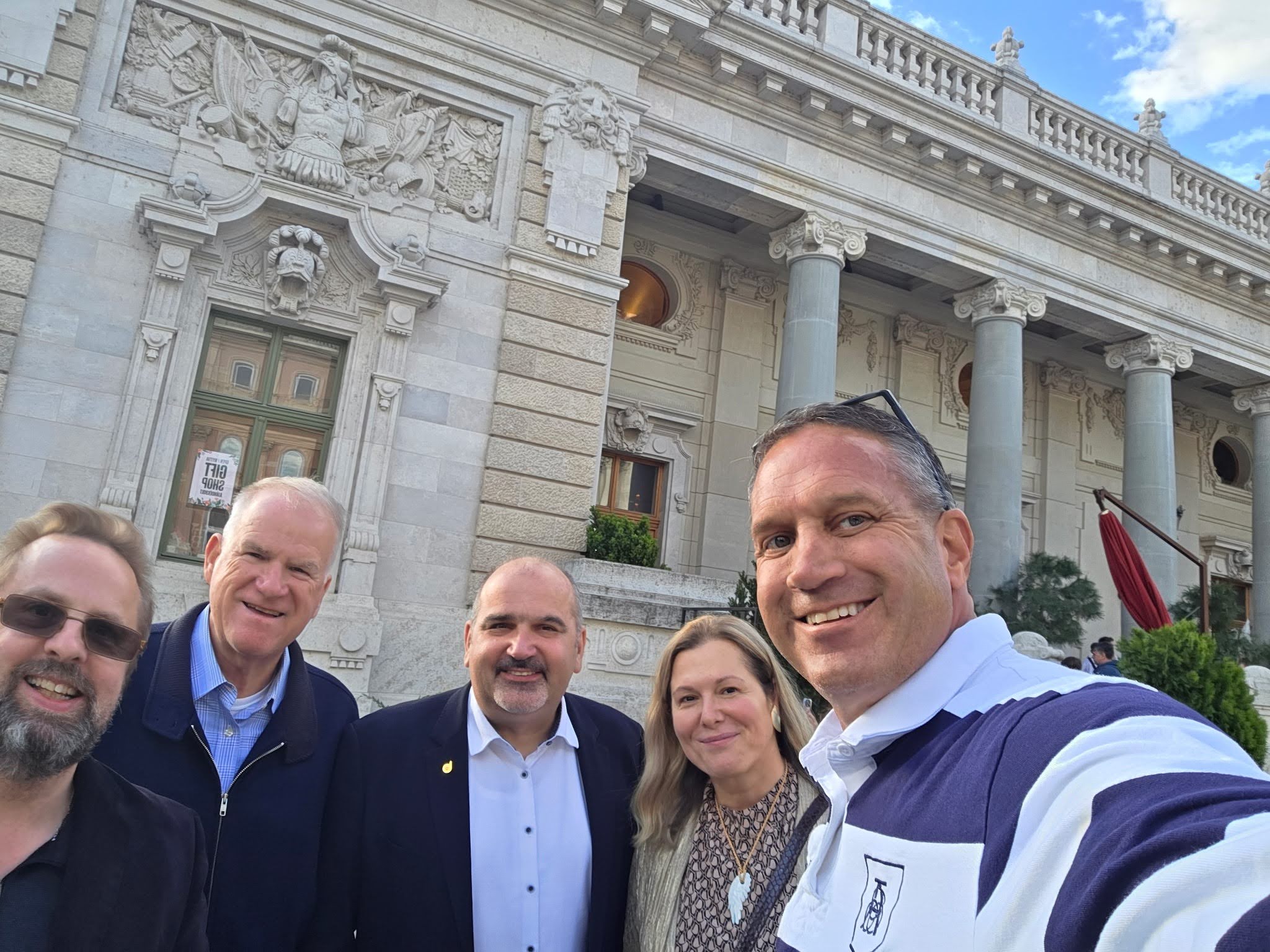
Ralph Cochran, president of the International Classical Christian Alliance (ICCA), the international branch of the Association of Classical Christian Schools (ACCS), arrived in Budapest carrying a vision that had been forming since 2008. He traced the ICCA's growth across Latin America, where the Brazilian association is preparing its first national conference and where the movement now reaches Ecuador, Mexico, and beyond. But his eyes were fixed on Eastern Europe. "We are not gathered here out of despair for what has been lost," Ralph said, citing Habakkuk 2:14. "We are here out of expectation for what is being restored."
His vision for the summit was concrete: the attendees were the potential founding generation of something like an ACCS Europe, a regional association to support, connect, and accredit classical Christian schools across the continent. Ralph was emphatic that the project belonged to the leaders in the room. "I want to support this work," he said, "not own it."
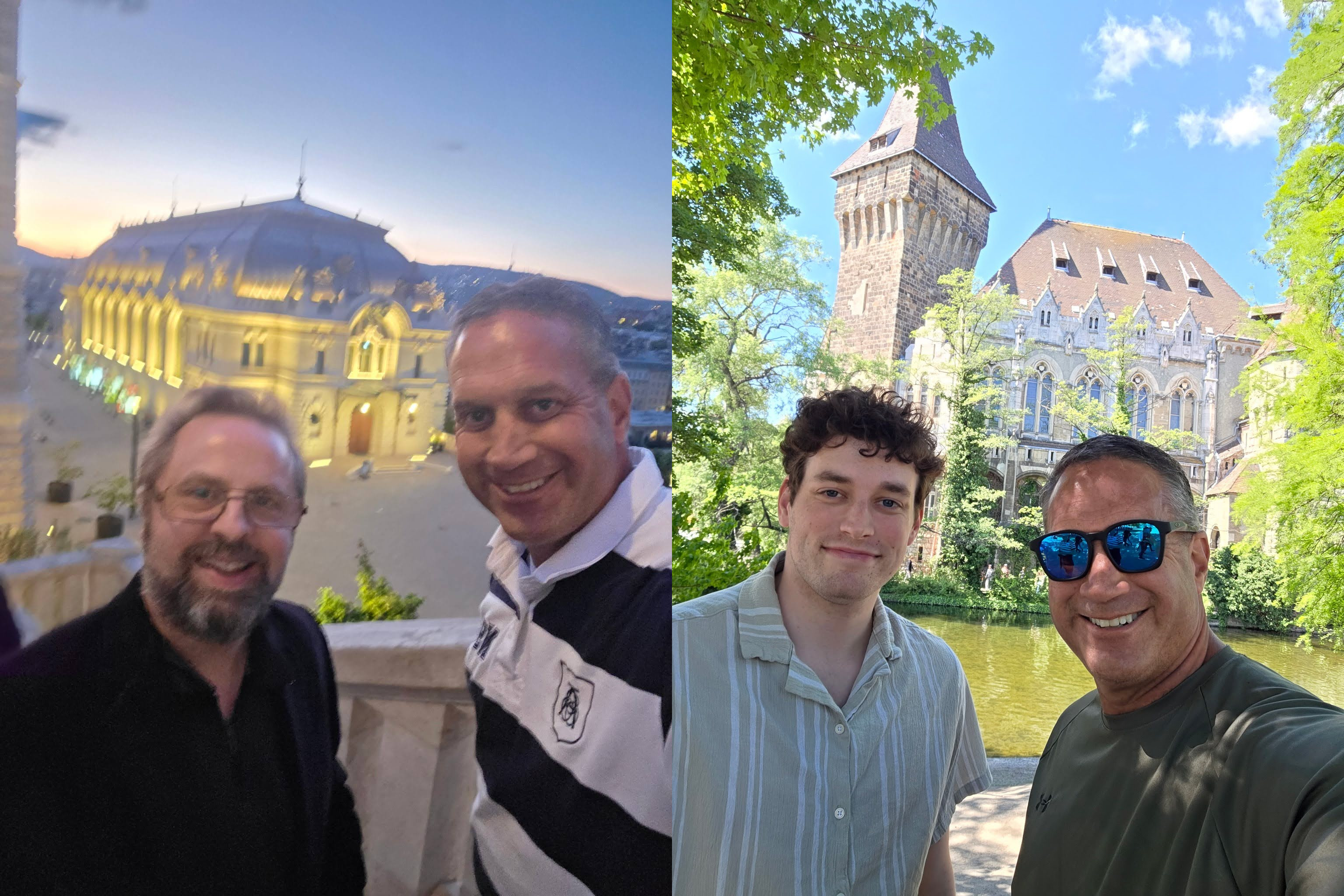
Dr. Steve Turley, scholar, author, and one of the most recognizable voices in the classical Christian education movement, arrived in Budapest and made no secret of why the city mattered. "This city is the genuine article," he said. "The architecture, the art, the music, this is real Christian civilization, not an American approximation of it."
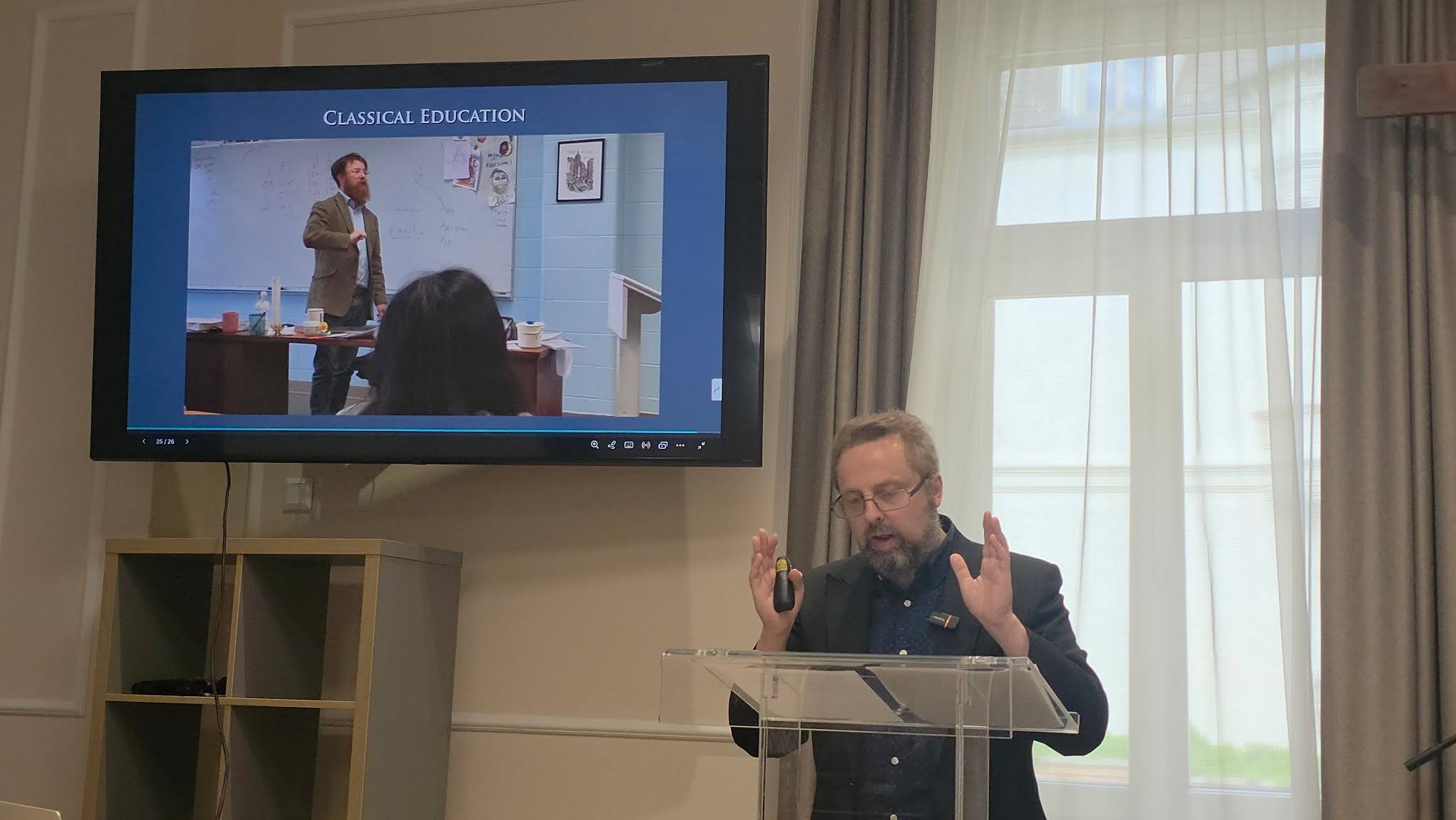
In his lectures across both days, Dr. Turley wove together the personal and the civilizational. He began with a story of humility from his years in the classroom, the day his students caught him committing a logical fallacy and corrected him on the spot. "I was learning alongside them," he said. It was, he suggested, one of the finest things that ever happened to him as a teacher.
His formal address on Day Two was one of the conference's intellectual centerpieces. He argued that the world is experiencing not merely a religious revival but a civilizational one, and that classical Christian education sits at its very heart. He identified five "formative media" through which civilization shapes the minds and souls of its people: cathedrals (the spatial grammar of a society), architecture (its visual constitution), music (represented by the revival of sacred composers like Arvo Pärt), art (a renaissance in iconography inviting what he called the practice of "gazing"), and education the "transmission grammar" and the soul of the entire project.
"The cathedral and the classroom," Dr. Turley concluded, "are part of the same project. You cannot restore the soul of a civilization without attending to both."
He also spoke about the integration of theology into all of life, a conviction born from his own teaching evolution. "Theology permeates art, music, fashion, identity," he said. "It is the integrating principle of everything." Classical education, properly understood, is not a subject among subjects. It is the atmosphere in which all subjects breathe.
The Impossible School
No story in the conference carried more narrative force than the account offered by Dr. Borbála Grébecz-Dula, the founder and director of Veritas Collegiate Academy and a trained lawyer, who walked the room through the improbable journey of building Hungary's first classical Christian school from scratch.
"The directive to build a classical Christian school came from Szenci Sándor," Dr. Dula said, referring to the leader of Hungarian Baptist Aid. "And as a lawyer, as a school administrator, I genuinely could not see how it was possible. But I believed that what he saw was God's will."
The school opened during the COVID-19 pandemic with nine students, one classroom, and the principal's office. From that beginning, Dr. Dula built a curriculum that walked a careful legal and pedagogical tightrope: preserving every element required by Hungary's national curriculum to ensure students could pass the national school-leaving examination, while using the remaining flexibility to stay within thirty percent of the national framework to introduce distinctly classical elements. These included 90-minute class periods, a dual homeroom teacher system (one male, one female per class), integrated science instruction, board games as pedagogical tools, and a remarkable elective called the "Art of Seeing" that trains students to perceive the deeper meaning of the world around them. Electives in law, psychology, and entrepreneurship round out a curriculum that Dr. Dula describes as built for the whole person.
The school's legal status in Hungary remains, by her own characterization, open to interpretation. "As a lawyer, even I find it interpretable," she said with dry humor. "We are treated as an international school by the system but held to the same standards as every Hungarian school."
The connection with the ACCS came after Dr. Dula flew to the United States to visit one of the finest ACCS schools in the country, spending three days observing classes and speaking with everyone willing to talk. "They didn't know who I was," she laughed. "I was just a strange woman who spoke English with an accent and showed up in every classroom."
She invited a school representative, Carl Walm, to visit Budapest in return. He arrived late at night to find an empty school and a cold McDonald's burger for supper. But then Dr. Dula took him to the top of the Great Market Hall, and the lights of the city spread out before him. "I told him that every real Budapest child should have a favorite view of this city," she said. "And I told him mine." He said he was beginning to understand something.
After that visit came a meeting in Colorado with ACCS president David Goodwin. A mutual commitment was made Veritas would pursue full ACCS accreditation and become the first ACCS international school. The accreditation self-study was led by József Álmos Katona, who undertook the painstaking work of demonstrating compliance with every ACCS indicator in a context entirely unlike anything the indicators were originally designed for.
"If we can do this in Hungary," Dr. Dula told the room, "anyone can do it anywhere."
Rachel Franklin, the American missionary teacher serving on Veritas's faculty, offered conference attendees a window into the lived reality of classical education in a Budapest classroom. Observers sat in on her Omnibus literature class, watching students move fluently between vocabulary, narrative analysis, symbolic interpretation, and direct biblical application, connecting a short story about a young girl's character transformation to Philippians 2:3-5 with the ease of students trained to see the sacred in the literary.
Rachel reflected on her pedagogical approach: "Before the reading, I give them more exercises with the vocabulary they're going to encounter in the text. Afterward, I have them write a narration, recording what they saw. Narration is one of the classical methods. It forces you to articulate what you've understood."
When asked about her mission as a Christian teacher in Hungary, she was direct. "Every Christian has the responsibility to represent Christ through their actions. I get to do that every day. Students show up with bad attitudes, they do things that irritate me, but by being patient, by showing them what the love of Christ can look like, I think that is doing my job as a Christian." She also spoke of planting seeds. "I can spread Christ's words whenever possible, but I can't control how people will react. That's God's work. My job is to share it."
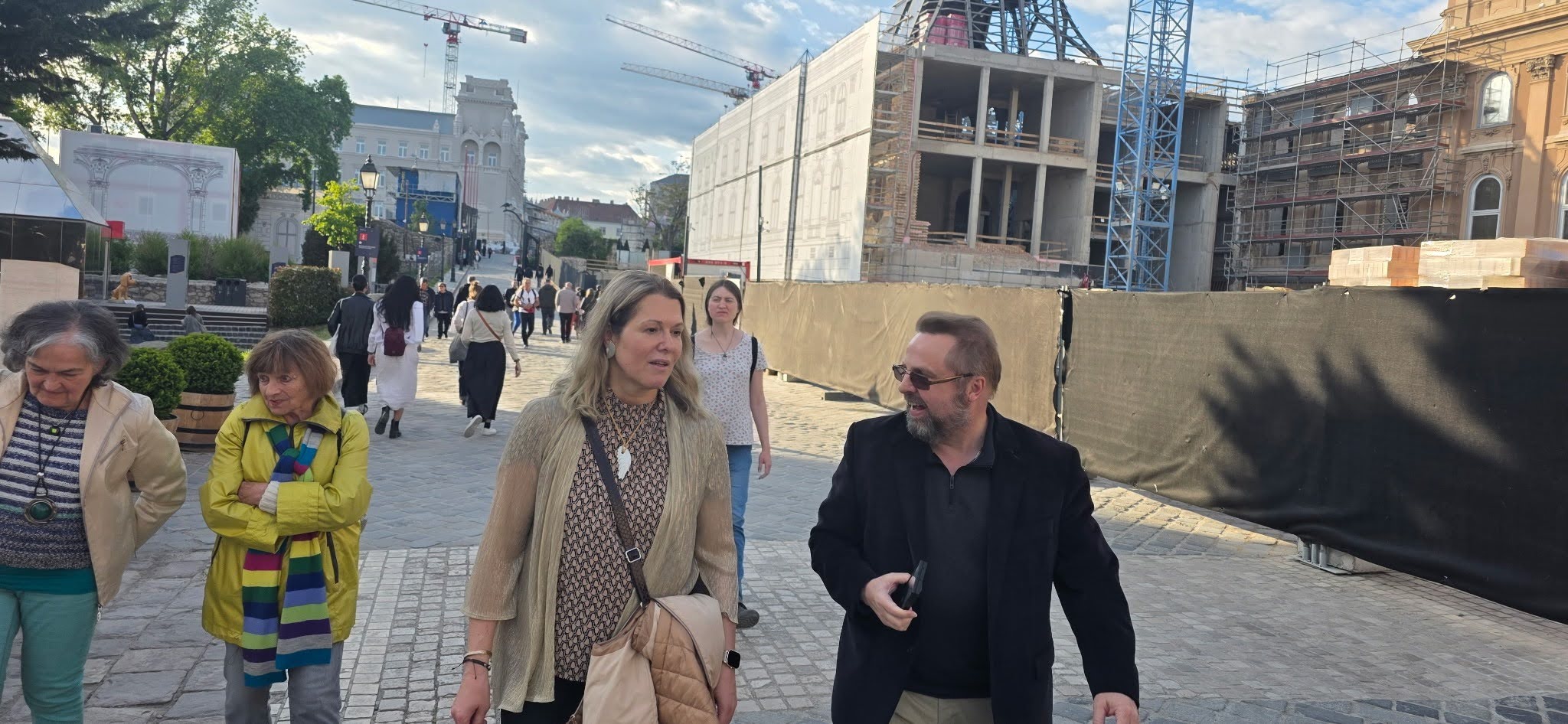
The theme of faithfulness under pressure was deepened by Rev. Bogumił Jarmulak, the pastor and theologian from Poland who, in one of the conference's most significant moments, was named the ICCA's first Ambassador to Europe. Rev. Jarmulak has spent decades doing the patient work of theological formation in Central and Eastern Europe, a region where Protestant Christianity often operates in the shadow of both Catholic cultural dominance and post-Soviet secularism. His appointment signals the ICCA's commitment to building not just a network of schools but also a network of leaders: people with deep roots in local cultures who can carry the classical Christian vision forward in ways that an American organization alone cannot.
Drawing on C.S. Lewis's wartime sermon "Learning in Wartime," Rev. Jarmulak argued that moments of crisis do not justify abandoning the formation of the next generation; they demand it more urgently than ever. He named three enemies of the work: excitement, which tempts educators to fixate on the immediate crisis rather than the long-term mission; frustration, the gnawing sense that there is never enough time, money, or people; and fear, which he called "the most dangerous of the three" because it paralyzes the imagination and makes a positive future unthinkable.
"These enemies must be named," he said, "in order to be resisted."
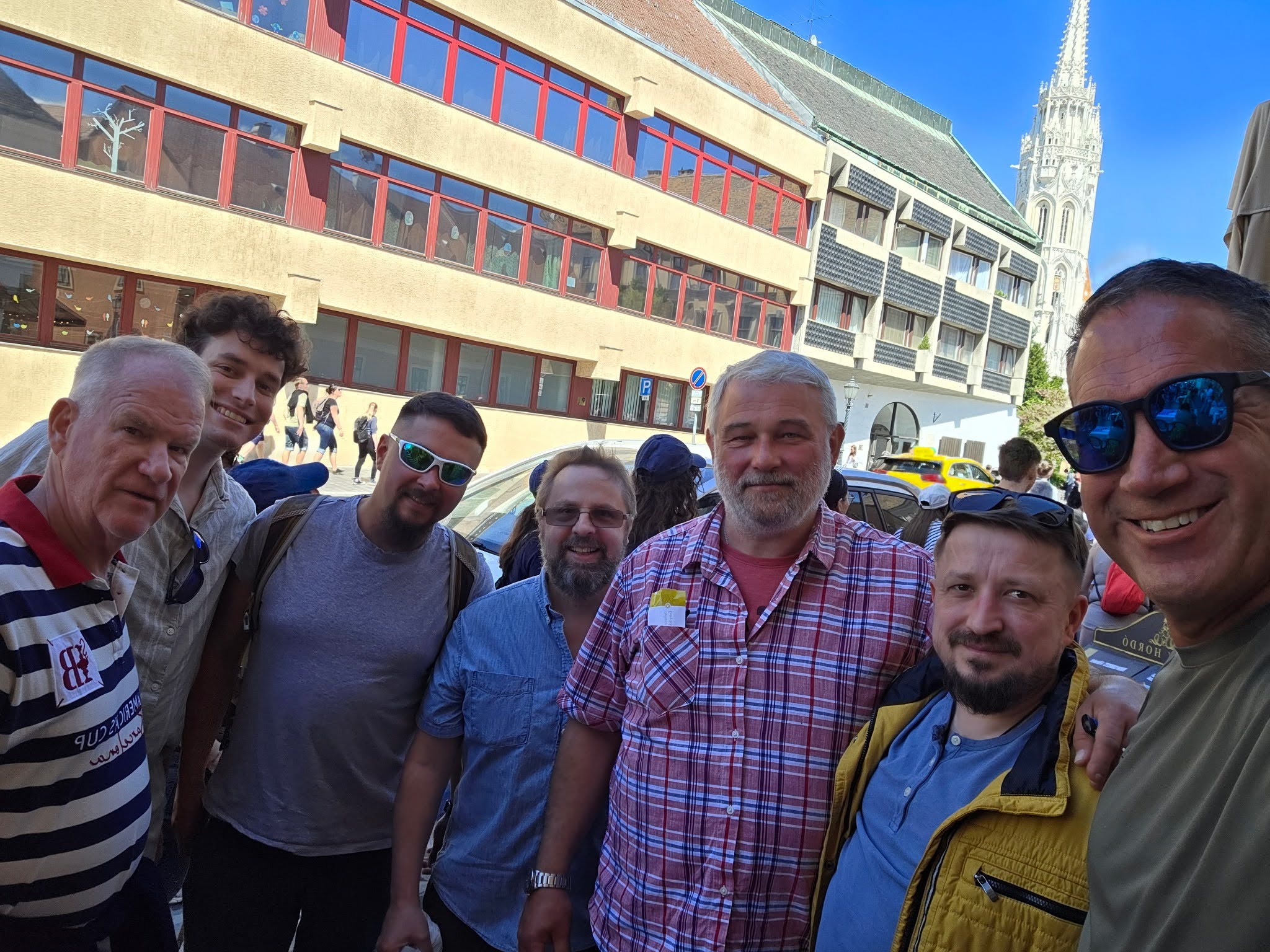
He spoke of three active projects in Ukraine: a school, a daycare center, and a leadership school that refuses to use war as an excuse to abandon educational formation. Literature clubs there cultivate moral imagination even as the country endures bombardment. "The formation of a child's character," Rev. Jarmulak said, "is not a luxury. It is the most essential work we can do."
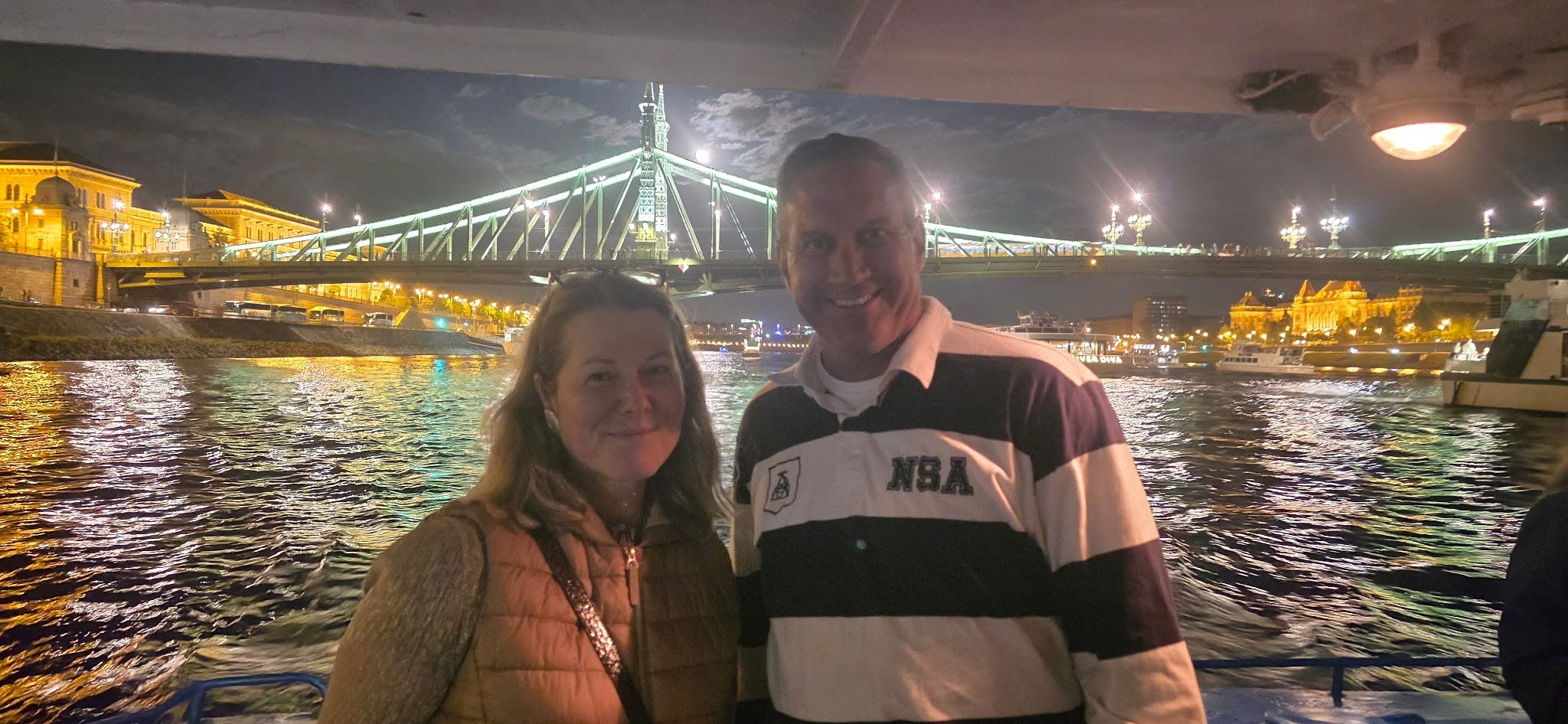
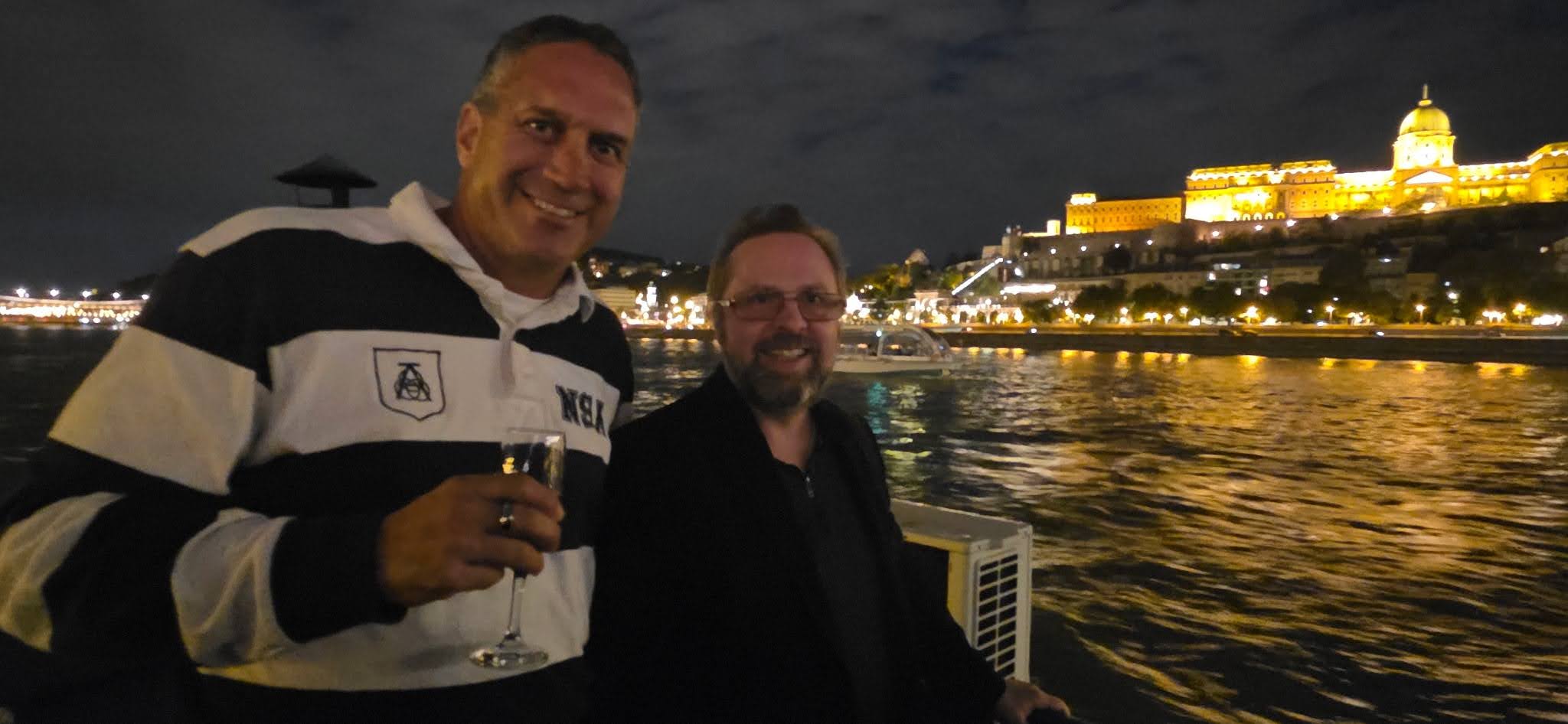
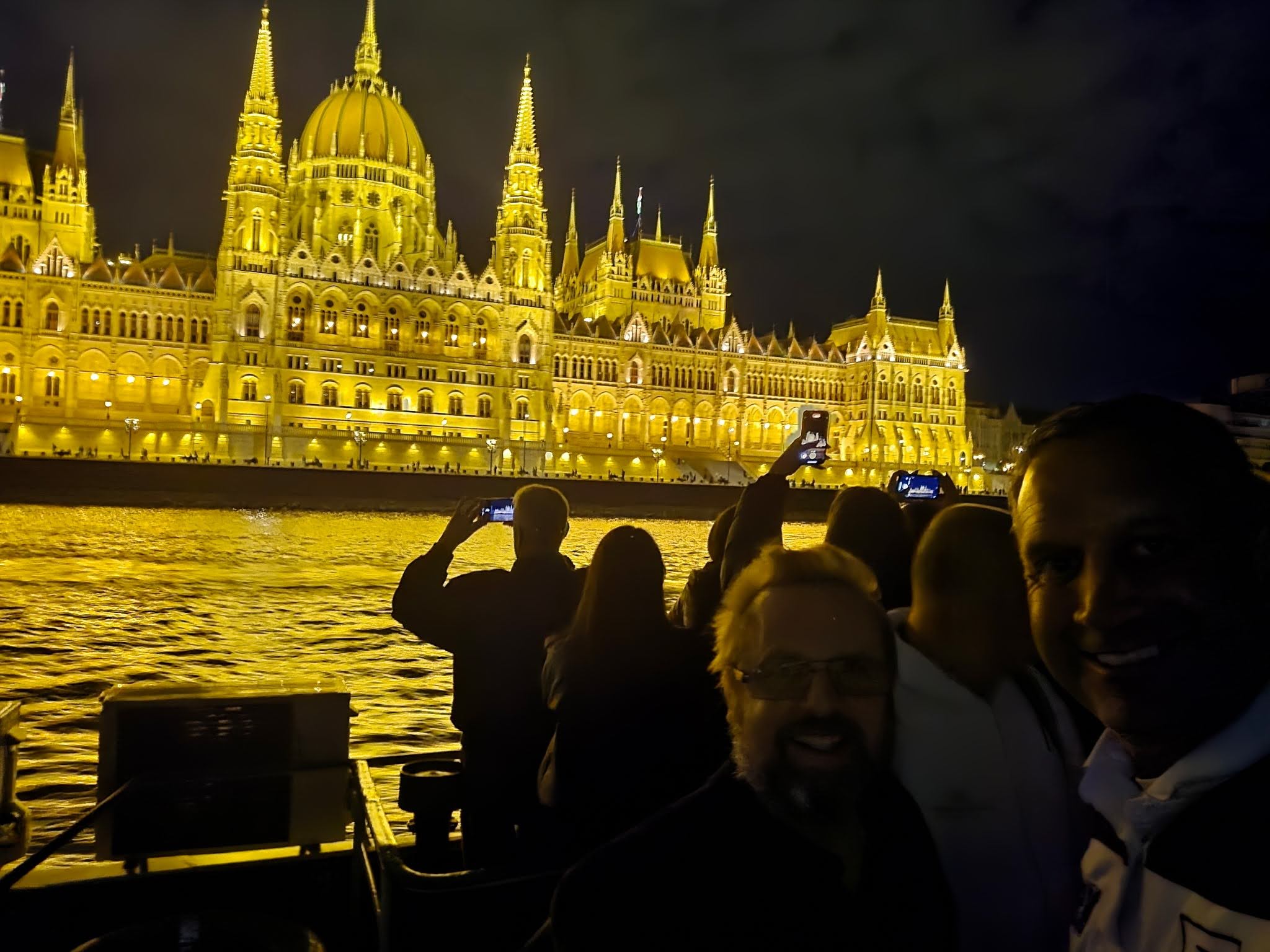
Between the two days of formal sessions came one of the summit's most memorable moments, an evening cruise on the Danube. As the boat moved slowly between the illuminated banks, Buda's castle and citadel on one side, Pest's parliament and baroque facades on the other, something happened that formal sessions rarely produce. Conversations deepened. Walls came down. Pastors and school founders from countries with difficult histories found themselves standing at the rail together, watching the same river that has divided and united Central Europe for centuries. The bridges arched overhead like cathedral vaults. The lights of the city shimmered on the water with a constancy that made the troubles of any particular era seem smaller, and the work of any particular generation seem part of something much longer. It was, by multiple accounts, the moment when the summit became not just a conference but a community. The abstract language of "civilizational renewal" became concrete: these were real people, carrying real burdens, doing real work in real cities, and they were no longer doing it alone.
Building for the Long Term
Ralph's closing remarks carried both practical weight and the long view. He outlined the ICCA's phased strategy leadership summits to build vision, teacher training, and educational seminars as a second stage, and eventual institutional organization to form recognized regional associations. Practical initiatives include translating foundational curriculum materials into Russian, Ukrainian, and Polish; developing the Atlas program to deliver digital curriculum internationally; and facilitating teacher exchanges between American and European schools.
For schools ready to take the next step, Ralph encouraged the pursuit of ACCS accreditation not as a bureaucratic exercise but as a genuine process of self-examination, a means of demonstrating to the world, and to themselves, that the work is what it claims to be.
Most of all, Ralph concluded as he had begun not with despair but with expectation. The classical Christian tradition, born in the ancient world, refined in the cathedral schools of Christendom, carried through the Reformation and into the New World by generations of believers, is finding its way home. Europe is not the graveyard of Christian civilization. It may be one of the places where its next chapter is written.
"You are Nehemiah's workers," Ralph told the room. "You are repairing the ruins. And the wall will be rebuilt."